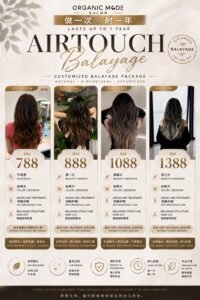
Hair colour prices can be difficult to compare because a short menu description rarely tells the whole story. “Full colour” may mean a simple single-process refresh for one client and several bowls of product, pre-lightening and a corrective toner for another. Your hair history, length, target shade and chosen technique all affect the final bill. Before booking a hair salon in Johor Bahru, learn what sits behind the quotation so you can set a realistic budget and avoid surprises.
1. Your Starting Point Matters Most
Natural hair is usually more predictable: Virgin hair gives a colourist a clearer base, although its depth, undertone and resistance still influence the formula. Moving one or two shades is generally more straightforward than making a dramatic leap.
Previous colour changes the plan: Box dye, henna, dark permanent colour and old highlights remain in the hair even when they are no longer obvious. Removing or blending them may require testing, multiple formulas or several appointments.
Condition sets the safe limit: Porous, brittle or over-processed hair may not tolerate the desired level of lightening. A careful stylist might recommend strengthening care, a darker target or a staged transformation rather than risking breakage.
2. Length and Density Affect Product Use
Longer hair needs more colour: Product must saturate every section evenly. A price advertised for short hair may therefore rise for shoulder-length or waist-length hair.
Thickness matters too: A dense bob can use more product and time than fine hair that reaches below the shoulders. Accurate quotations consider both length and density, not one category alone.
Extra bowls are not always an upsell: Running short during application can create patchy results. Ask how additional product is charged and request approval before the stylist mixes more.
3. Technique Changes the Work Involved
Single-process colour: Applying one shade from roots to ends is often simpler than dimensional work, although grey coverage and resistant hair may need specialised formulation.
Highlights and balayage: Sectioning, hand painting, foils, lightener, toner and placement strategy add time and technical complexity. Partial, half-head and full-head services should not be compared as if they are identical.
Creative or corrective colour: Removing bands, balancing uneven porosity or creating vivid shades may involve several rounds of lightening and toning. This is specialist work, and the price usually reflects both time and risk.
4. The Target Shade Determines How Far You Must Travel
Staying close to your base is often simpler: Rich brunettes, dimensional espresso and softly warmed tones continue to suit 2026’s preference for glossy, low-maintenance colour. They can be more forgiving as roots grow.
Going much lighter costs more: Pale beige, smoky blonde and high-contrast looks may require pre-lightening, bond support and precise toning. Dark previously coloured hair rarely reaches a clean blonde safely in one sitting.
Fashion shades require preparation: Blue, teal, pink and other vivid colours generally need a light, even canvas. They can also fade quickly, so the real budget includes refresh appointments and colour-protecting home care.
5. Toner, Gloss and Treatment May Be Separate
Ask whether toner is included: Lightener removes pigment but does not always create the final tone. Toner refines warmth, coolness or neutrality and is often essential to the finished result.
Understand gloss services: A gloss can refresh shine and tone between major appointments. It may be a useful lower-commitment option, but it still uses professional product and time.
Question treatment add-ons: Bond care, deep conditioning and scalp protection can be valuable when suited to your hair. The stylist should explain the purpose and price before adding them, not present them as an unexplained necessity at checkout.
6. Stylist Experience and Salon Positioning Influence Price
Seniority may carry a premium: A director or colour specialist may charge more for advanced correction, formulation skill and consistency. For a routine root refresh, a trained junior may offer excellent value under supervision.
Products affect operating costs: Professional colour systems, ammonia-free options, organic-inspired formulas and specialised treatments may cost more than basic alternatives. Price should be supported by clear information, not vague “premium” language.
Location shapes overheads: A convenient mall salon may have different costs from a neighbourhood studio. Compare expertise, inclusions and service quality rather than assuming one setting is automatically better.
7. Consultation Time Protects Your Budget
Send photographs first: Share your current hair in natural light, its length from the back and your inspiration images. This helps the salon provide a range before you travel.
Book an assessment for major changes: A strand test can reveal how the hair lifts and whether the target is realistic. It may prevent an expensive appointment that cannot safely deliver the desired result.
State your maximum spend: There is no embarrassment in setting a firm budget. A good colourist can suggest face-framing highlights, a root blend or a richer brunette as an alternative to a full transformation.
8. Maintenance Is Part of the True Cost
Calculate the return cycle: Solid root coverage may need frequent touch-ups, while balayage and blended roots can grow out more softly. Ask when the colour is likely to need toning, refreshing or re-lightening.
Protect colour in Johor Bahru’s climate: Sun, humidity, swimming and frequent washing can speed up fading. Gentle cleansing, sensible water temperature and UV or heat protection may extend the result.
Avoid an oversized routine: You usually need a few appropriate products rather than every item on the shelf. Ask for priorities: cleanser, conditioner, mask or heat protection, depending on your service.
9. Ask for a Clear, Itemised Quotation
Confirm what is included: Check consultation, lightening, toner, treatment, wash, trim, blow-dry, taxes and stylist level. Ask which items are optional.
Clarify possible increases: Length, density, extra bowls and unexpected correction can change the estimate. Agree that the team will speak to you before exceeding the quoted range.
Read promotion terms: A discounted package may apply only on selected days, with selected stylists or up to a certain hair length. A deal is only useful when it covers the service you actually need.
10. Judge Value, Not Just the Lowest Number
Consider wearability: A colour that complements your natural base, looks good as it fades and needs fewer appointments may be better value than a cheaper high-maintenance option.
Account for correction risk: Fixing uneven bands, brassiness or damaged hair often costs more than choosing appropriate expertise at the beginning.
Leave with a plan: You should know the agreed formula direction, expected maintenance and home-care priorities. Transparent advice turns a price into an informed decision.
There is no single “correct” price for hair colour because no two heads of hair are identical. The fairest quotation reflects your starting condition, product use, technique, time and aftercare. Ask detailed questions, be open about your budget and allow an expert to suggest a safe route. When the price is transparent and the plan is realistic, you can focus on enjoying colour that looks current, feels healthy and remains manageable long after the salon finish.